Tennis Court Repairs and Resurfacing: Fixing the Most Common Court Problems
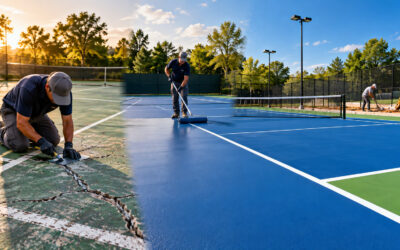
A tennis court that plays well is one that is looked after. Most surface problems start small, and with timely tennis court repairs they can be fixed before they affect play or spread into the base of the court.
This article covers the most common problems found on hard courts, how each one is repaired, when resurfacing becomes the better option, and how to make the work last as long as possible.
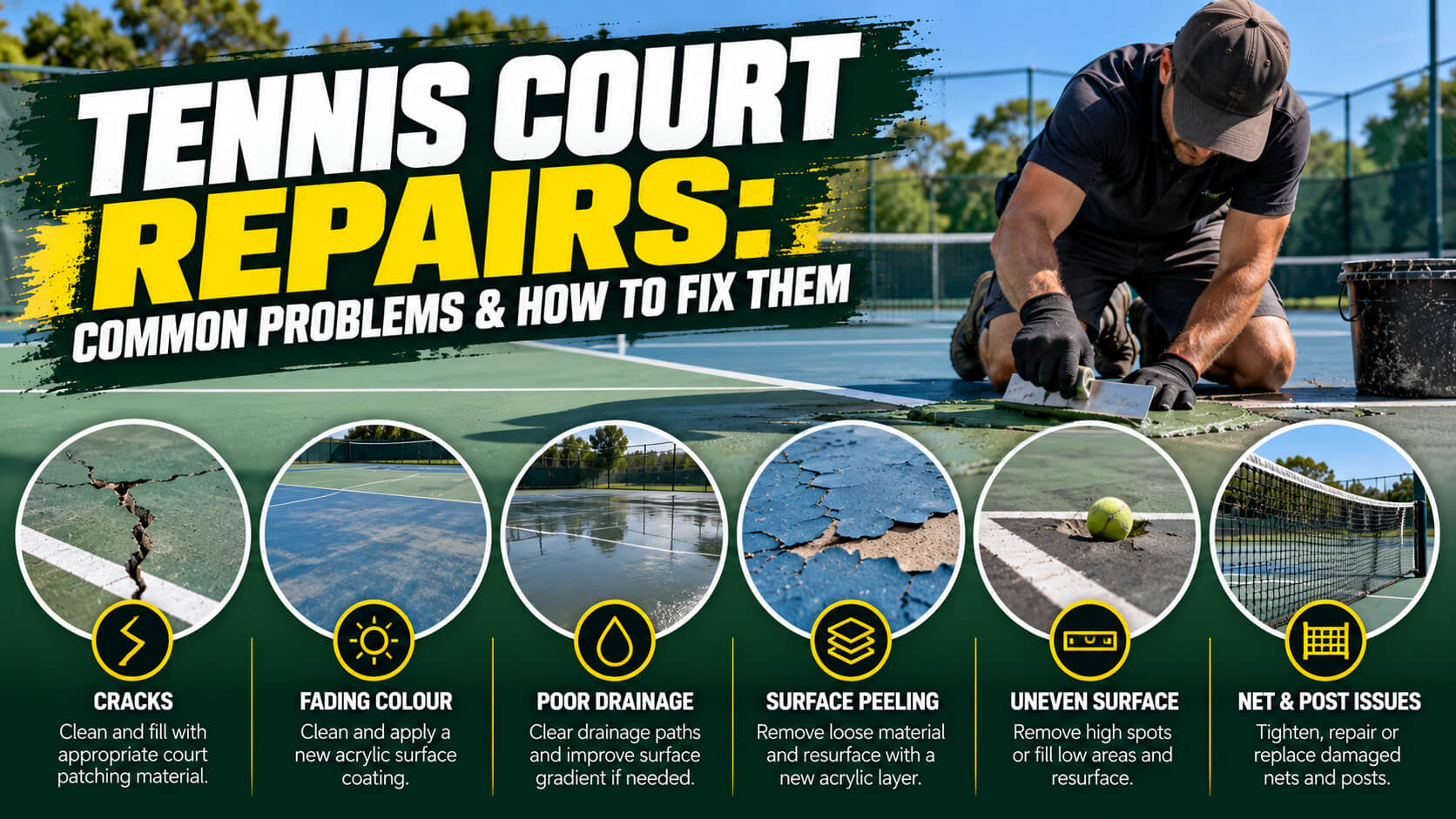
Common Tennis Court Problems and How Repairs Fix Them
Each type of damage has a different cause, and the repair method needs to match it. Treating the symptom without addressing the cause usually means the problem returns within a season.
Cracks
Cracks are the most common issue on asphalt and concrete courts. They are caused by ground movement, temperature changes and water getting into the base.
- Hairline cracks are cleaned out and filled with a flexible acrylic crack filler, then blended into the surrounding surface.
- Wider or recurring cracks may need a crack repair system that bridges the gap and allows for slight movement, reducing the chance of the crack reappearing.
Left untreated, cracks let rainwater into the base. This weakens the layers underneath and makes later repairs more extensive and more expensive.
Ponding Water
Water that stands on the court long after rain has stopped points to low spots, often called birdbaths. Besides interrupting play, standing water speeds up surface wear and encourages algae growth.
Repairs involve marking out the low areas once the court is wet, then levelling them with a patching compound so water drains off correctly.
Blistering and Peeling
Bubbles or lifting patches in the coating usually result from moisture trapped beneath the surface or from coatings applied in poor conditions. The affected coating is removed, the area is prepared and new layers are applied to match the rest of the court.
Algae, Moss and Slippery Areas
Shaded corners and courts under trees are prone to organic growth, which makes the surface dangerously slippery. Professional cleaning removes the growth, and treatment helps slow its return. Trimming overhanging branches also improves drying time after rain.
Damaged Edges and Net Posts
Crumbling court edges and loose net posts are often overlooked. Edges are rebuilt to stop the surface breaking away further, and net posts are reset or replaced in secure footings to keep the net at the correct tension and height.
All of these issues are handled as part of our tennis court repairs service, starting with an on-site assessment to identify the cause of each problem.
When Repairs Turn Into Tennis Court Resurfacing
Repairs are effective when damage is limited to specific areas. Once problems spread across the court, patching becomes uneconomical and leaves a surface that looks and plays inconsistently.
Resurfacing is usually the better choice when:
- Colour has faded over most of the playing area
- The surface has worn smooth and lost its grip
- Repair patches are visible across the court
- Playing lines are worn and difficult to see
- The court has gone four to eight years without a new surface
Resurfacing does not replace repairs. Cracks, low spots and damaged areas are fixed first, then new acrylic layers are applied across the entire court for a uniform finish.
Choosing the Right Finish When Resurfacing
Resurfacing is an opportunity to improve how your court plays, not just how it looks. A few decisions are worth discussing before work begins.
Standard or Cushioned Acrylic
Standard acrylic systems give a firm, durable surface suited to most clubs, schools and homes. Cushioned systems add rubberised layers beneath the colour coats, reducing impact on joints. They suit courts used by older players or for long sessions.
Surface Speed
The amount of sand in the acrylic coats affects how fast the ball moves off the surface. More texture slows the ball and adds grip, while a smoother finish plays faster. The right choice depends on who uses the court and how.
Colour
Colour affects ball visibility and surface temperature. Mid-tone blues and greens offer good contrast with a yellow ball. Very dark colours absorb more heat, which matters under strong South African sun.
What to Expect During a Resurfacing Project
A typical tennis court resurfacing project follows a set sequence:
- Site assessment and agreement on the scope of work
- Deep cleaning of the existing surface
- Crack repairs and levelling of low spots
- Application of acrylic resurfacer layers
- Application of colour coats
- Line marking to regulation dimensions
Acrylic coatings need dry conditions and suitable temperatures to cure properly. Rain can pause work, so projects are best planned around the weather. During Highveld summers, this means scheduling around afternoon thunderstorms.
Find out more about our process on the tennis court resurfacing page.
How to Make Repairs and Resurfacing Last
Good maintenance between projects protects your investment and extends the time before the next resurface.
- Sweep or blow off leaves and debris regularly
- Keep drains and surrounding channels clear
- Wear proper non-marking tennis shoes on court
- Keep bicycles, furniture and heavy equipment off the surface
- Trim overhanging trees to reduce shade and debris
- Have the court inspected once a year so small problems are caught early
Conclusion
Most tennis court problems can be fixed with targeted repairs if they are caught early. When wear spreads across the whole court, resurfacing restores grip, colour and consistent play, and gives you the chance to improve the surface.
Tennis Court Maintenance SA has worked on sports courts since 1971. We offer free site assessments, carry out all work without subcontractors and back every repair and resurfacing project with full warranties.
To book a free assessment or request a quote, call 082 657 6855, email sales@tenniscm.com or complete the contact form on our website.