Tennis Court Repairs, Resurfacing or a New Build: How to Choose
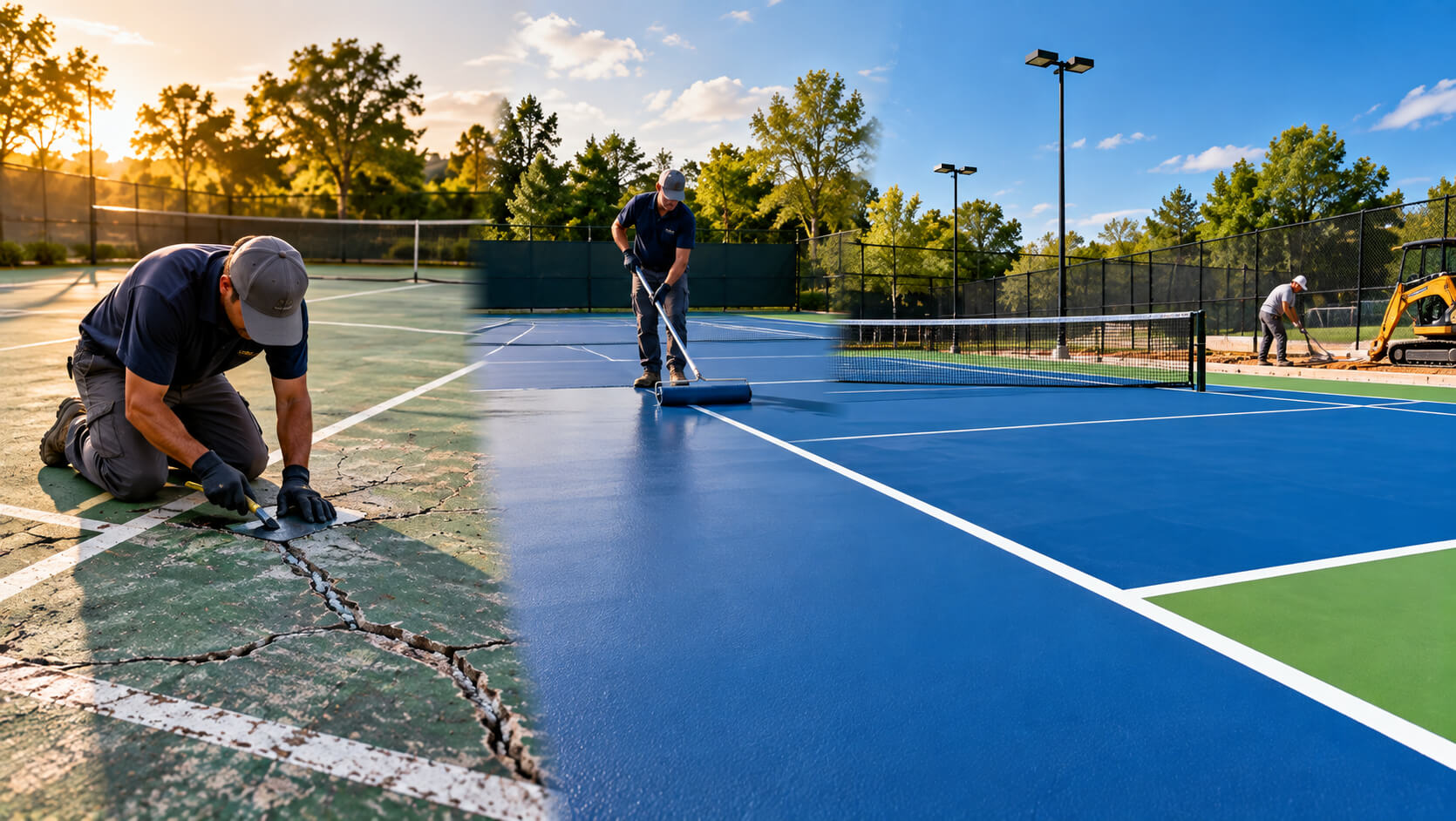
Every hard court wears down over time. Cracks appear, colours fade and water starts pooling where it shouldn’t. Most court owners then face a choice: targeted tennis court repairs, a full resurfacing of the playing area, or a completely new build.
Choosing correctly saves money and extends the life of your court. This guide explains what each option involves, the signs that point to each one, and how South African conditions affect the decision.
What Tennis Court Repairs Cover
Repairs deal with specific, localised damage while the rest of the surface is still in reasonable condition. The goal is to stop small problems from spreading and to restore safe, consistent play.
Typical tennis court repairs include:
- Filling and sealing hairline and structural cracks
- Levelling low spots (“birdbaths”) where water collects after rain
- Fixing blistered, peeling or delaminating acrylic coatings
- Repairing damaged court edges and surrounds
- Resetting or replacing loose net posts and footings
Signs Your Court Needs Repairs
If damage is confined to a few areas and the surface still plays evenly elsewhere, repairs are usually the right starting point. Watch for isolated cracks that widen each season, puddles that remain for hours after rain, small patches of lifting coating and uneven ball bounce in specific spots.
Addressing these early is far cheaper than waiting. Water that enters a crack weakens the base underneath, turning a minor fix into a much larger job.
What Tennis Court Resurfacing Involves
Resurfacing restores the entire playing surface rather than individual spots. It is the right choice when wear is widespread but the underlying base is still structurally sound.
A professional tennis court resurfacing project typically follows these steps:
- Deep cleaning – removing dirt, algae, moss and loose material.
- Crack and base repairs – creating a stable foundation for the new surface.
- Levelling – correcting low areas to restore proper drainage.
- Acrylic resurfacer layers – building up an even, textured base across the court.
- Colour coats – applying UV-resistant acrylic colour for grip and appearance.
- Line marking – repainting playing lines to regulation dimensions.
Signs It’s Time for Resurfacing
- Colour has faded across most of the court
- The surface feels smooth or slippery underfoot
- Cracks and patches are spread across the whole playing area
- Previous repairs are visible and make the court look patchy
- Playing lines are worn or unclear
As a general guide, acrylic hard courts need resurfacing every four to eight years, depending on usage and maintenance.
When a New Tennis Court Build Is the Right Choice
Sometimes the problem lies below the surface. If the base has shifted, has deep structural cracks or suffers from failed drainage, neither repairs nor resurfacing will last. A new build is also the natural route for schools, estates, clubs and homeowners adding a court for the first time.
Signs Your Existing Court Needs Rebuilding
- Large sections of the court have sunk or heaved
- Cracks return soon after being repaired
- Water drains poorly across the whole court, not just in isolated spots
- The court has been resurfaced several times and the base is failing
What a New Build Involves
Professional tennis court construction addresses the foundation, drainage and surface together. A typical new build includes:
- Site assessment – checking soil conditions, slope, orientation and access.
- Earthworks and drainage – preparing the ground and designing falls so water runs off correctly.
- Base construction – laying a compacted layerworks and an asphalt or concrete base.
- Surface system – applying acrylic layers and colour coats suited to the level of play.
- Finishing – installing net posts, marking lines and completing surrounds.
Multi-Sport and Custom Courts
A new build is the ideal time to plan for more than one sport. Courts can be designed with markings for tennis, netball and basketball, while padel courts are built to their own specifications. Planning this upfront avoids costly changes later.
Key Factors to Weigh Before You Decide
Extent and Depth of the Damage
Localised surface damage points to repairs. Widespread surface wear points to resurfacing. Damage to the base or drainage points to a rebuild.
Age and Level of Use
School, club and hotel courts see far more traffic than private residential courts, which shortens the time between resurfacing cycles. An older court that has been patched repeatedly is often closer to a rebuild than it looks.
Long-Term Cost
Repairs cost least upfront, but repeated patching adds up. Resurfacing resets the surface lifespan, and a new build removes recurring foundation problems entirely.
How South African Conditions Affect Your Court
- High UV exposure – strong sunlight fades colour coats and dries out surfaces.
- Summer thunderstorms – heavy downpours expose poor drainage and push water into cracks.
- Temperature swings – hot days and cold Highveld winter nights open up cracks through expansion and contraction.
- Coastal humidity – courts in Durban, Cape Town and Port Elizabeth are more prone to algae and slippery surfaces.
Scheduling repairs before the rainy season prevents water damage from spreading into the base over summer. For new builds, these conditions should shape drainage design and material choices from day one.
Conclusion
Tennis court repairs suit isolated cracks, ponding and small areas of damage on a sound surface. Tennis court resurfacing is the better investment when wear is widespread. A new build is the answer when the base has failed or when you are adding a court for the first time.
Tennis Court Maintenance SA has built and maintained sports courts since 1971. The team offers free site assessments, handles every project directly without subcontractors, and backs all work with full warranties.
Whether you need repairs, resurfacing or a new court, contact us for a free site assessment and quote. Call 082 657 6855, email sales@tenniscm.com or complete the contact form on our website.